Hit a Water or Sprinkler Line While Digging? Do This Next
Hit a water or sprinkler line while digging? Learn exactly what to do first, how to shut it off, and what repairs usually involve to protect your yard and home.
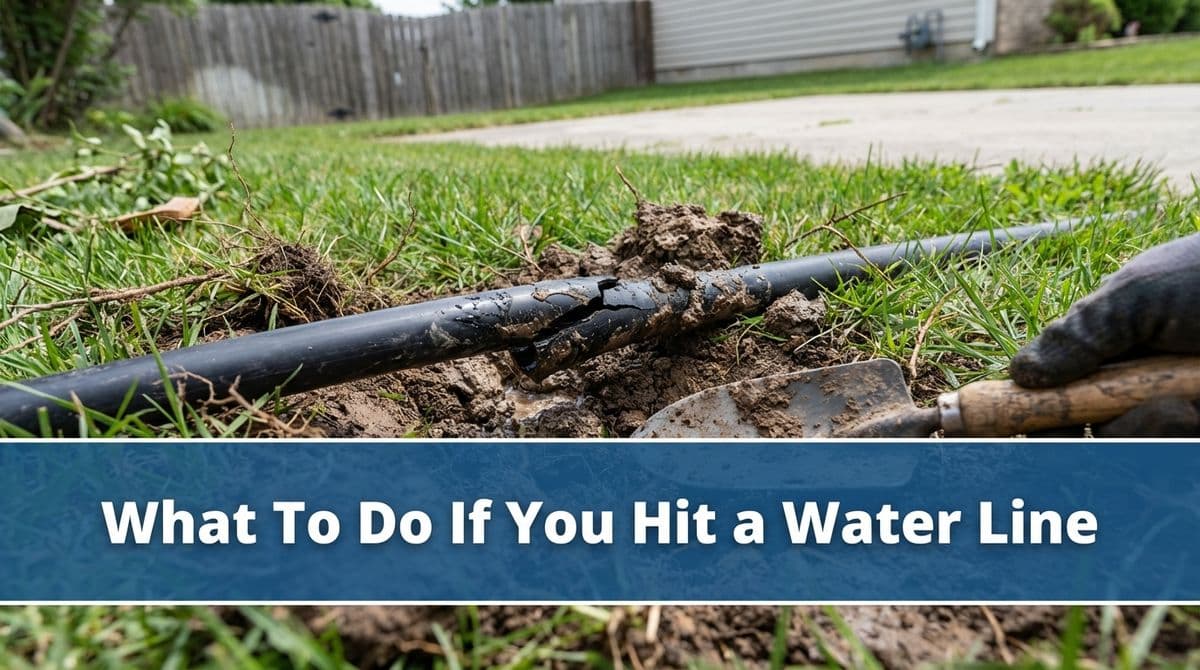
“I Think I Hit Something in My Yard…”
We recently got a call from a homeowner — let’s call her Melissa — who was in a bit of a panic. She’d been doing some light digging in her front yard when water suddenly started bubbling up from the ground.
“I don’t see a pipe,” she told us, “but I do have a sprinkler system underground. I think I hit something in my yard and water is coming up.”
Melissa wasn’t sure if it was a sprinkler line, an irrigation valve, or something tied into her main water supply. She didn’t have a shutoff tool, her sprinkler controller wasn’t even plugged in, and she was worried about soaking the yard and wasting water while we were on our way.
If you’ve ever been in that situation — shovel in the ground, unexpected water spraying up — you know how stressful it feels. Let’s walk through exactly what we told Melissa and what we do on calls like this, so you’ll know what to do if you hit a water line or sprinkler pipe while digging in your yard.
Step 1: Stay Calm and Take a Quick Look
When water first starts coming up, it’s easy to imagine the worst — that you’ve hit the main water line. In reality, most of the time homeowners hit irrigation or sprinkler pipes, which are usually smaller and shallower than the main service line.
Here’s what we suggest you do first:
- Back away from the hole so you’re not standing in a muddy, slippery area.
- Look closely at where the water is coming from — is it a small, steady spray, a bubbling spot, or a strong gush?
- Check for visible pipe or broken fittings. Sometimes the soil covers it quickly, so you may not see anything right away.
In Melissa’s case, she didn’t see a pipe at all — just water seeping up in the front yard where she knew there was an underground sprinkler system. That was our first clue that she’d likely nicked an irrigation line or fitting.
Step 2: Try to Shut Off the Water
The next priority is to stop the flow of water so you don’t flood your yard or run up your water bill. On the phone, we walked Melissa through a few options you can try too.
Check Your Irrigation Valve Box
Most sprinkler systems have a green (sometimes rectangular) box in the yard that houses the irrigation valves. Inside, there’s often a way to shut off water just to the sprinkler system.
- Look for a small shutoff valve or handle near the sprinkler valves.
- Turn it clockwise to close. It may be a quarter-turn ball valve or a multi-turn gate-style valve.
With Melissa, we suggested, “You can try to turn that valve and see if it’ll turn that spewing water off, just to keep it from soaking your yard and wasting your water.” Even if you’re not 100% sure it’s the right valve, closing it won’t usually hurt anything — it will just shut off irrigation water.
Look for a Shutoff in the Garage or Utility Area
Some homes have a whole-house or irrigation shutoff inside the garage or utility room:
- Check walls near the water heater, softener, or where pipes come through the wall.
- Look for a lever or round handle on exposed piping labeled “water shutoff” or “irrigation.”
We asked Melissa if she had a shutoff in the garage: she saw the sprinkler system controls, but not a clear shutoff valve, and the controller itself wasn’t even plugged in — another sign that the system had been inactive, but the underground lines were still pressurized by the main water supply.
If Needed, Shut Off the Main Water
If you can’t find an irrigation shutoff and water is still coming up, you may need to go to the main water shutoff at the street or property line.
- Look for a small box or cover in the yard near the street (often shared with your water meter).
- You’ll usually need a water shutoff key/tool to turn the valve.
Melissa didn’t have a shutoff tool, which is common. This is where having a plumber or irrigation pro on the way is really helpful — we carry the tools to shut those valves safely.
Step 3: Limit Damage While You Wait for Help
Once Melissa was on our schedule, we gave her a couple of simple steps while she waited the 30–45 minutes it would take us to arrive:
- Text us a picture of the spot where water was coming up so we could arrive prepared with the right fittings and repair materials.
- Keep people and pets away from the wet, unstable area so nobody slipped or twisted an ankle.
- Avoid more digging around the leak. It’s tempting to dig to “see what’s going on,” but that can make the repair harder or damage more pipe.
If the flow is slow and not threatening the house, it’s usually safe to wait for a pro. If water is running toward your home’s foundation, into the driveway, or near electrical equipment, treat it as more urgent and shut off water at the main if you can.
How We Fix a Hit Water or Sprinkler Line
When we arrive on a call like Melissa’s, here’s what we typically do:
- Confirm where the water is coming from — sprinkler lateral line, main irrigation supply, or domestic water line.
- Carefully expose the pipe using hand tools so we don’t cause more damage.
- Cut out the damaged section and replace it with the proper pipe and fittings (PVC, poly, etc.).
- Test the system to make sure there are no other hidden leaks.
- Backfill and compact the soil so the area settles properly.
Like we explained to Melissa, we do charge a dispatch/diagnostic fee to come out, but we apply that fee to the job if you have us do the repair. We can’t quote an exact price over the phone because every leak is a little different until we see it in person.
How to Avoid Hitting Pipes Next Time
While accidents happen, there are a few practical ways to reduce the chances of hitting a water or sprinkler line in the future:
- Call 811 before digging deeper holes, fence posts, or trenches so utilities can be marked.
- Know where your sprinkler lines run — save photos or drawings from the installer if you have them.
- Dig by hand in areas where you suspect pipes, especially near heads, valves, or the main line to the house.
- Keep a water shutoff tool on hand so you can quickly turn off the main if needed.
And if you do hit something? Don’t panic. Shut off what you can, take a picture, and give us a call. We handle situations like Melissa’s all the time, and most of the time we can have you back to normal the same day.